 p. 14- We said our sad goodbye to BAXTER and headed to the airport for our Virgin Air flight to Heathrow, but knew he'd be more than OK in the spoiling care of Stephanie's mother Sylvia for the next 20 days . When we had asked for an upgrade, they told us they were over booked. So much for milking the pregnancy card. Steph did get an extra meal when she told them she was starving. Given that Virgin's food is pretty good, we'll take this as a plus. We spent the next 10 hrs catching up on the latest films, sleeping and playing backgammon. We have been asked if we have any names for the baby yet, and so Jrod brainstormed and came up with a plethora of names for our in-utero little girl. Some good, most jokes. We agreed that Anais is hard for most people to pronounce much less spell. We hope this trip will reveal the right one.
Arrived Heathrow Friday Sep. 15 in the AM and tried to get on standby for an earlier flight to Rome. No go on the first flight, but we did get on the second one that got us in 30 mins. before the car rental place closed. With our silver Fiat Punto we headed to nearby Ostia Antica outside of Rome for much needed showers and sleep after 26 hrs of travel.
Saturday Sept. 16. Thunderstorms were in full and beautiful effect and so we awoke to a light show. The weather made our decision to not see the ruins at Ostia (that rival those of Pompeii), a lot easier. So after breakfast we headed South in the direction of Naples to the Amalfi Coast. It was a nice 5 hour drive that took us via the colorful sprawl that is Naples, Vesuvius, Pompeii and into the Sorrento Peninsula. Sorrento was a pretty nice town, with wider boulevards than what we were later going to encounter. We winded our way along the cliff side stopping for views of towns such as Castlemare di Stabia, Vico Equense, Piano, Sorr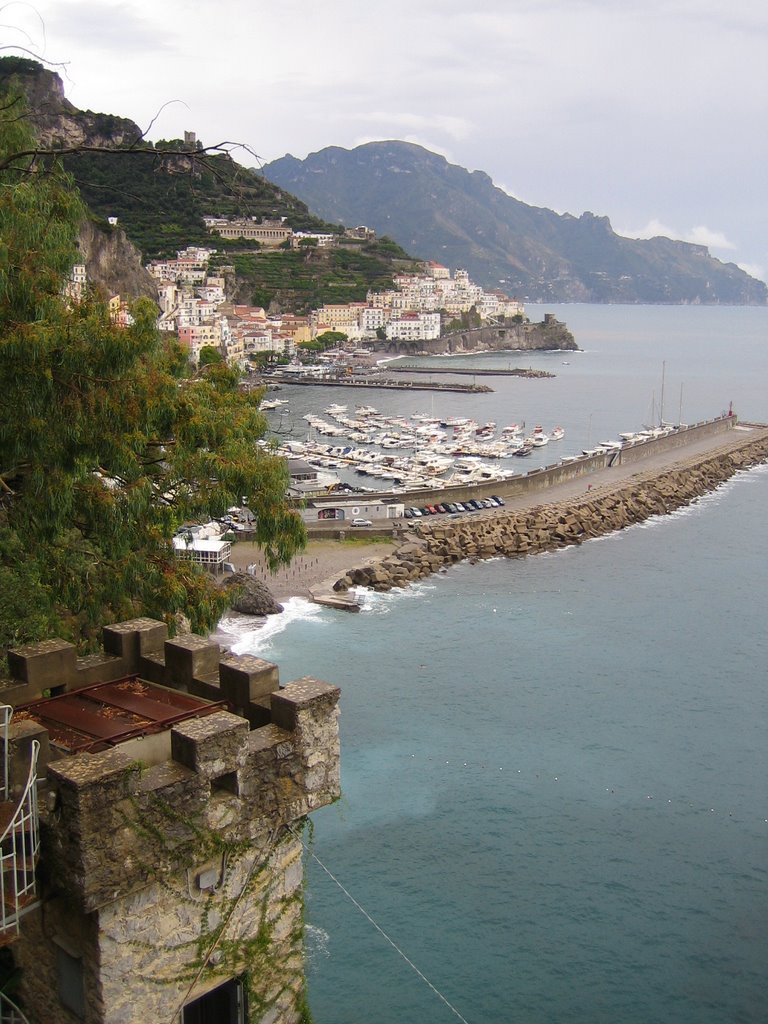 ento and into Positano; one of the most renown and picturesque places in the area; and on to our charming town hub next to it called Praiano. Priano is only 5km East of Positano and does not have the same prestige, but it was very charming without all the tourist traffic. We made our way up the hill to our hotel for one night. The hotel Margherita was g
 reat! We had a lovely room on the cliff overlooking the ocean and a nice pool in which we refreshed ourselves before taking the local SITA bus to Positano for a yummy dinner at Da Vincenzo. We had the local Caprese salad made with the most delicious Mozzarella and great tasting tomatoes, a local specialty originated in the nearby Island of Capri. The locals look down on other mozzarella if it's not di buffalo, calling it Fior di Latte "Flower of Milk", when it's not from the local breed of bovine. Afterwards we took one of the many staircases down to t
 he beach where we got a free concert from some musicians doing pretty good covers of U2's "Still haven't found what I'm looking for" and Tears for Fears' "Woman in chains" with a choir. We walked along the steps/streets and enjoyed some lemon gelato, making our way back up the hillside to the plaza for our bus. Lemons grow everywhere here and are used to make their famous Limoncello liqueur. While we waited, Jrod threw out more names that were tomboyish. One of these was Samantha. We both like the idea of calling her Sam. At 11pm we caught the last bus back along winding roads, which once again amazed us at how adept the drivers were at making sharp turns around corners barley wide enough for a car and going up 16% grades. We saw many cars with swipe damage, even a tiny Smart Car; which is one of, if not the smallest, cars on the market. Back at the hotel we slept with the balcony doors open until the thunderstorm's noise was too loud.
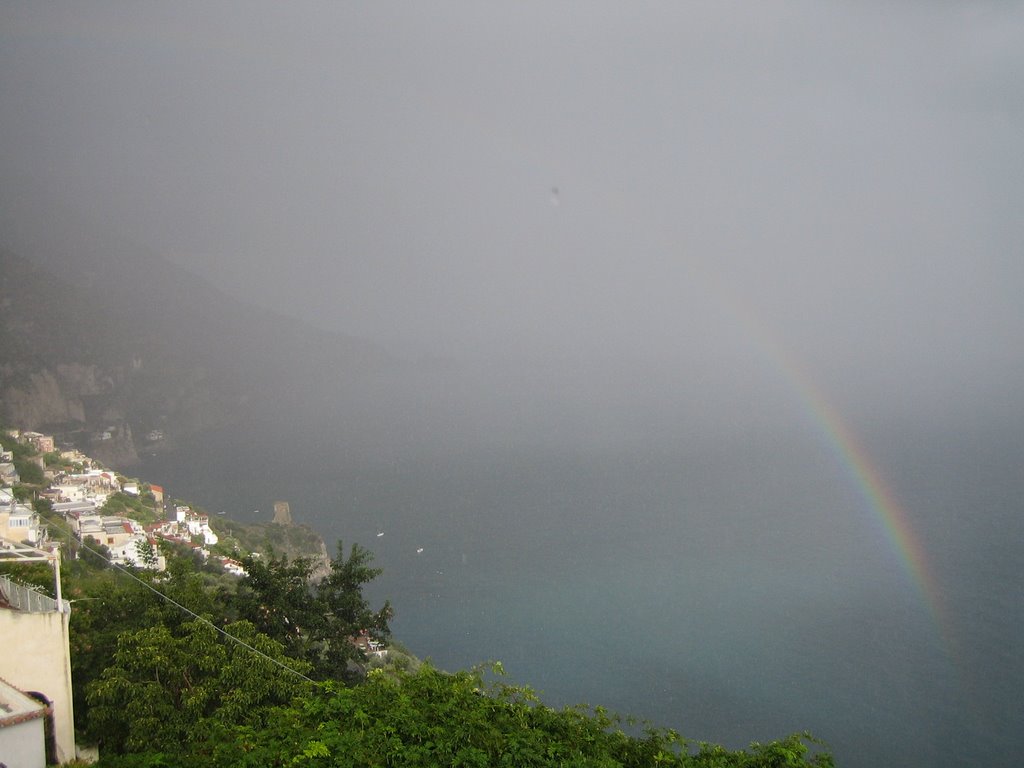
Sunday Sep. 17. Jetlag still had the best of us, so we woke before sunrise to a mixture of clouds and a rainbow spanning the bay. Although the weather was not ideal, it was still a pretty spectacular setting. We headed out to explore the Eastern towns of Amalfi on the coast and Ravello in the hills. We parked hugging the road and I do mean hugging, having found a nook that left 3" between the cliff and the car on one side and the left wheel hanging in the road on the other. By Italian standards this was more than acceptable, however we had some fellow tourists gawk
 while we tried to un-park without destroying our rental either into the cliff or knocked into the sea by a passing bus. The parking gods favored us as we pulled away without incident. The town of Amalfi is crowded with tourist buses, which is why we were forced to park a bit out of town. Once in the city we did walk around and even bought Samantha her first European dress: a pretty pink and
 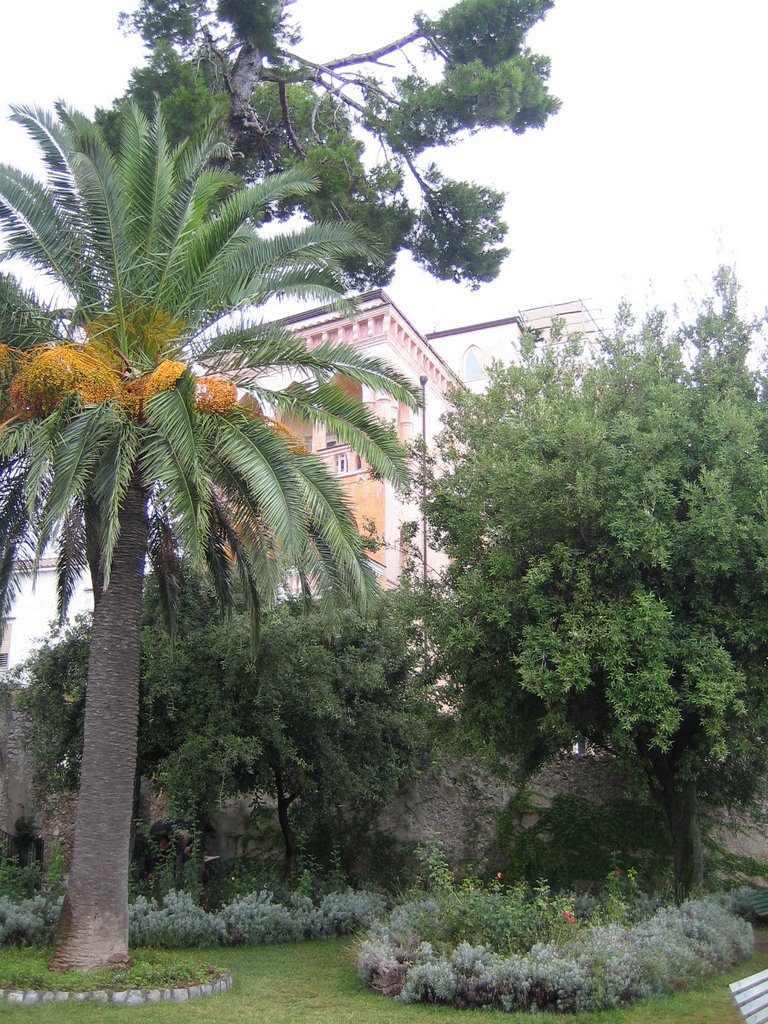 white lace summer dress. After a quick stroll up and down the streets (a.k.a staircases) we decided move on to the next stop. Once safely on the path we headed up the mountain to the charming village of Ravello. To imagine the topography of the region, flip a sugar cone upside down and stick a postage
 stamp on the lower side--that’s Amalfi, Positano and Priano. The pointy tip of the cone is Ravello. To say the views are spectacular is a major understatement. When one imagines all the scenes of Italy: 1,000 year old churches, gorgeous villas, sculpted gardens, cobblestone streets set in a pine forest interspersed with vineyards and ancient bougainvilleas with a panoramic view that would make an eagle envious; now you're beginning to imagine Ravello. It is obvious why wealthy and famous people have made this their home. We drove out before lunch over the mountain pass on our way to Bari on the other side of Italy along the Adriatic Sea. Along the way, we stopped in Avellino where we heard the food was good. We did not find the
  restaurant we had been recommended because at 3pm the whole city was deserted. Seems Sunday meals are done hidden away somewhere for most Italian families. We slid in 5 minutes before closing to the only place open where they graciously gave us the delicious scrapings of the pan: baked pasta with meatballs and hard boiled eggs in a tomato sauce followed by veal with mushrooms. Once our bellies were refueled we also filled up the car which at EUR 1.30 a liter ($6/gallon) was pricey, but the convenience of having a car and all the out of the way places it enabled us to see made it seem like a bargain. All together, the drive to Bari took 3.5 hours and we arrived to nice weather for the first time in our trip. We got to the ferry terminal and checked-in early which allowed us time to stroll the old city before our 10pm sea crossing to Croatia.
The night ferry to Croatia was a new cruising experience for us on Jadrolinija, the C roat national ferry line. Our only prior cruise experience was Xingolati, a 4-day Carnival Cruise ship to Ensenada with 2000 ravers, so this was the other end of the spectrum for sure. We had a cabin with a sink, port hole and two bunks, which made us feel royal compared to the backpackers commanding positions in the lounge areas. They had some lounges and a restaurant, but it was not a high end cruise ship. During dinner we met a dozen Mexican adults traveling as well. Seems like God makes them and they find each other.
 The boat docked in Dubrovnik at 7am on Monday the 18th in the middle of a torrential downpour. We were fortunate to drive off the boat, unlike the poor souls who were pelted and soaked walking. Even in stormy weather the city's hillside location makes it a sight to behold. The beige stone houses have red tile roofs and quaint shuttered windows. We got our passports stamped and met our guide Dom, a 25 year old congenial kayaker who took us to our lodging at a private home a few stairs outside the main gate to the walled city. Our hostess Maria did not speak a lick of English, but hand gestures and smiles were sufficient. Later she noticed the pregnant belly and was all smiles to us, saying the only word we understood: "bebe". Dom took us up the hill to Adriatic Kayak's offices overlooking the old walled city, where
 we had coffee, checked out maps, ferry schedules, and made plans for our kayaking expedition to the islands just offshore the next day. We headed back to our room during the downpour and opted for a nap before lunch. As we were leaving the residence we helped Maria bring in some groceries which she had bought for us and insisted we sit and drink the juice she purchased. We tried our hardest to communicate that we were late to meet our guide for lunch, and later felt we should have spent a few minutes with her. Lesson learned - always take the time to appreciate others. We met Dom for lunch all the while trying to avoid the rain. We became part of the 'run & take cover gang'
  while the streets of Dubrovnik became waterfalls and rivers. We wore shorts and sandals so were not too bothered by the wading. On our way back to the room, we caught a break from the rain and saw that the sky was clearing so we turned around to explore the old city, which fortunately lasted the rest of the day. The city itself is built behind an 11th century wall that was rebuilt and upgraded following a devastating 16th century earthquake. As well as being effective at repelling invaders, it's quite a sight to see. The most recent aggressors were the Serbs in 1991. During their attempt to maintain their domination of the region following the break up of Yugoslavia, they shelled the city repeatedly. There's a map on the wall of the city that shows where all the shells hit and the damage they caused. It's a big blotched map. Dubrovnik never fell to the Serbians, and it faired much better than many of the towns in the east of Croatia; a few of which were literally flattened. We spent the rest of the evening strolling
  ancient walkways and staircases being greeted by the local cats and dogs while evaluating whether BAXTER would like it or not; stopping here and there to rest at picturesque points and cafes in the plazas. There are a couple of bars that are set outside the walls along the water. They play pretty cool music, and we can imagine them packed when the weather is nice. One place warned women “NO TOPLESS”. It seems this first leg of the trip has been all about hillside towns and staircases which although not planned, has allowed us to indulge in good food, coffee and desserts at cafes and restaurants.
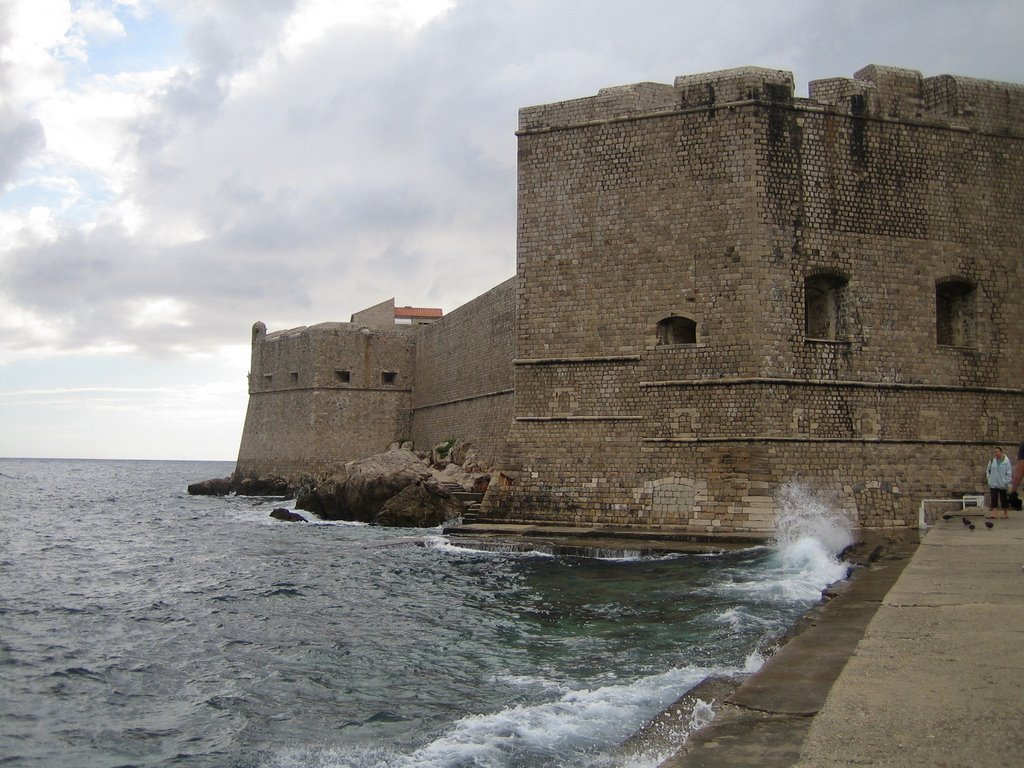 Tuesday the 19th was another early morning, not being able to sleep due to jet lag. At this rate we might get a full 8 hrs. of sleep by the end of the trip. We were up and at 'em for breakfast at the Pucic Palace hotel. We were picked up by Dom to catch the 10am ferry to the island of Lopud, 1 hour away. Rain was once again the special du jour. Now I know what it must feel like to live in Portland. The town of Lopud looks as though it fell out of a fairy tale. It lies along a west facing 2km long half moon shaped stretch of beach buttressed on one end by an 11th century monastery/fortress and a coniferous
 forest on the other. A palm tree lined seawall that serves as an embarcadero runs the length. No cars are allowed (or required) on the island which adds to the charm. After checking into our clean and comfortable guesthouse we were eager to get out and kayak despite the foul weather, so we hit the water. Once we left the relative calm of the bay and rounded the point we quickly realized exactly how nasty it was. 4 ft white capped swells and a stiff headwind laced with rain quickly convinced us that it was probably better napping weather, so we turned around so as not
  to tempt fate. After a short nap I looked outside and observed that the weather had improved immensely, so I left Stephanie undisturbed and headed out for a hike around the island with the intent of making it to the beach we had planned to paddle to. I reached the middle of the island and decided to do a detour through the woods. I charged up a trail that got darker and more narrow with each step until I came upon and old aba
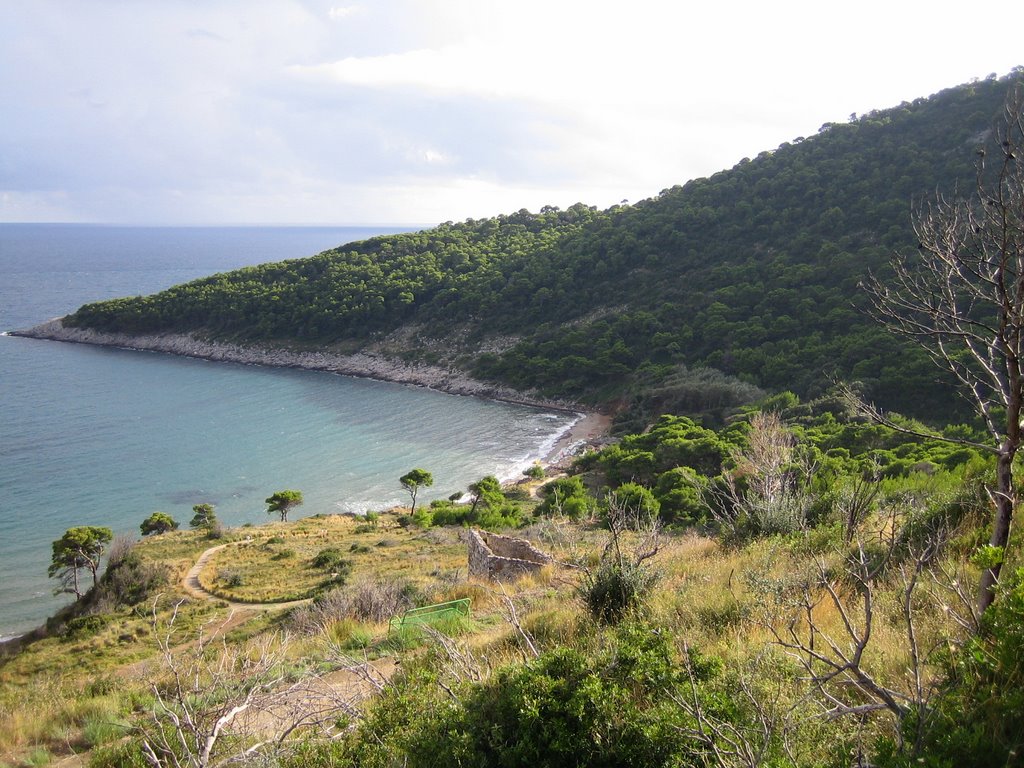 ndoned farmhouse made of stone. Half of the roof was caved in and under the other half was an attic with what appeared to be fresh hay in it. All of the sudden visions of the Blair Witch Project seized my mind, so I made double-time back the way I came. I got to a vista above the beach and decided I didn't want to lose all the elevation I'd gained, so I continued higher on towards the ruins of a fortress that marks the highpoint of the island about 1,200 ft
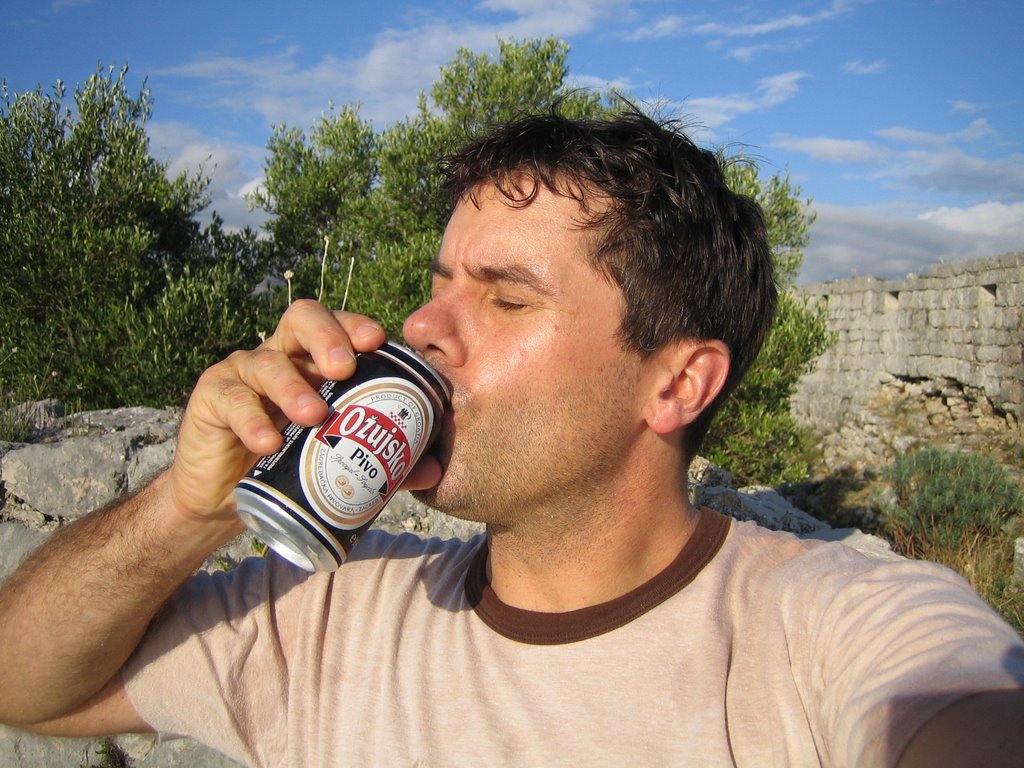
  above the surf. Once I arrived the sun was out and it was gorgeous, so I hopped around the ruins until I found the perfect spot to enjoy a beer from my pack. After soaking up some rays and suds I started back down towards town; and just in time too. It seemed the sun brought out all the hikers as I passed about 20 heading up. It was a good opportunity for me
 to say hello/good day in as many languages as I could think of. By then the sun was getting low on the horizon, so I jumped in the kayak and headed out to enjoy the sunset on a much calmer sea. That evening we had what has been the best meal yet. The owners of the guesthouse where we stayed also have a restaurant up the hill. Its the kind of place one imagines when one t
 hinks of the idyllic European family run operation. All the produce was picked from the surrounding gardens, homemade red wine pared wonderfully with the picture perfect moussaka and a homemade port style sweet wine accentuated chocolate and marmalade crepes for dessert. If I could say la dolce vita in Croatian I'd say it right now! During our meal on the terrace we were entertained by a cat that jumped about 3 ft in the air to catch a moth the size of a pigeon in mid-flutter, which he proceeded to toy with for the duration of our meal.
The next day, Wednesday the 20th was the kind of day that keeps you coming back for more. Clear skies and bright sunshine greeted us for breakfast on the terrace. This was the same spot we had a great meal the night before. Our hosts used to run it as a restaurant for the public, but now only cook for their houseguests. Lucky us! Shortly thereafter, we set out in the kayak for the beach we had planned on going to the previous day. Calm, tropical-clear water was our highway. About half way there we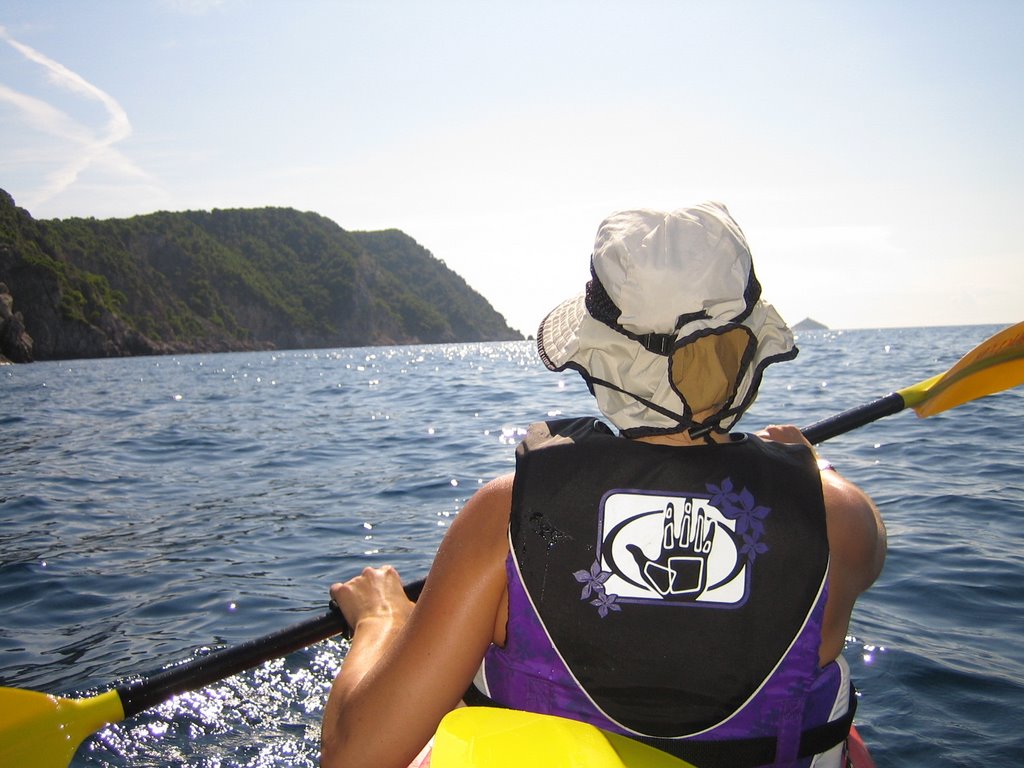 happened upon a large cathedral-like cave and paddled in for a look and a break from the sun. I imagined many a pirate holing up here once upon a time. We arrived at the beach in the early afternoon and set up for the day. One can hike to the beach from town, so we were not alone.
  I bet during the high season its quite a zoo. We went for a stroll and found that one end of the beach was dedicated to nudists, putting to rest the question of how Croatians viewed nudity in public. After a nap we started our paddle home around the opposite way we came. By this time the afternoon winds were picking up. It seems that 9 times out of 10, when in a kayak any sort of wind turns out to be a headwind. This time was no exception. By the time our destination came into view we were battling large whitecaps which turned out to be a lot of
 fun! Had it not been sunny and warm it would have not been so fun. That evening we enjoyed another fine meal on the terrace of our hosts' restaurant. This time we were joined by a group that was paddling with the outfitters that hooked us up with our kayak. There was a father and his daughter from Davis, CA, a solo gal from Australia, and a charming Canadian couple that lived in Banff. The gentleman was originally from Quebec, so I asked him
 whereabouts. It turned out he was from the same lake that my grandmother was born on and were my dad lives to this day. His family name is Macpherson of the Macpherson Bay clan. They own so much land they have a bay named after them! I am quite certain my dad knows several members of his family. And for the 1,289th time I was reminded of how small a world it really is...
 Thursday, the 21st was a bright and early day. After departing Lopud on the 7am ferry we got on the road out of Dubrovnik headed for a rendezvous with an 11:45a ferry to the island of Hvar. We were told it should take less than 2 hours to get to Drvenik to catch the ferry. In reality it took over 2.5 hrs due to the nature of a windy 2 lane highway full of lorries and caravans. We arrived at the ferry
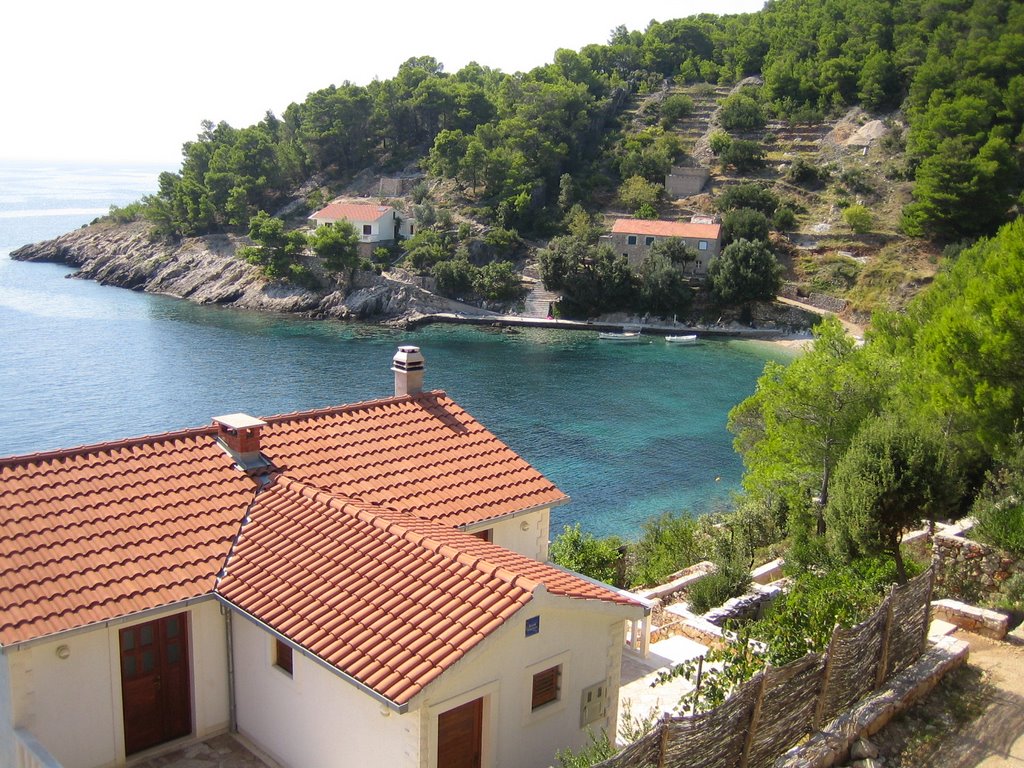 with what we thought was 2 minutes to spare. Turns out we were over 1 hour early due to the fact that they were now operating on the off-season schedule. No worries, we went for a swim and had a bite to eat. Hvar is 80 km long. The almost deserted end lies just offshore from the mainland. The road that connects it to the opposite end, which was our destination, has been described as a "white knuckle" drive, but after the Amalfi
  coast we were used to no shoulders on narrow winding roads with zero room for error. Around kilometer 25 we stopped to look at a map and saw small roads leading to hidden white stone coves with only a handful of residents. We turned off and spent a few hours napping and swimming until we resumed the drive west to Hvar. Once we arrived we saw a
 beautiful fort overlooking the harbor town's red tiles roofs and stone buildings. We checked into our guesthouse just before sunset and had a toast on the balcony before we headed to a fabulous seafood dinner at Luna restaurant. We strolled the town after dark and understood why the harbor was filled with yachts and was known as a party town. It is on par with Dubrovnik when it comes to tourism, but on a lower scale and many times more nautical. Across from the port there are several islands and rock out cropping that beckoned us to explore the next morning.
 On Friday the 22nd, Jrod began the day with a run and a swim. Running around a city is the best way to learn it he
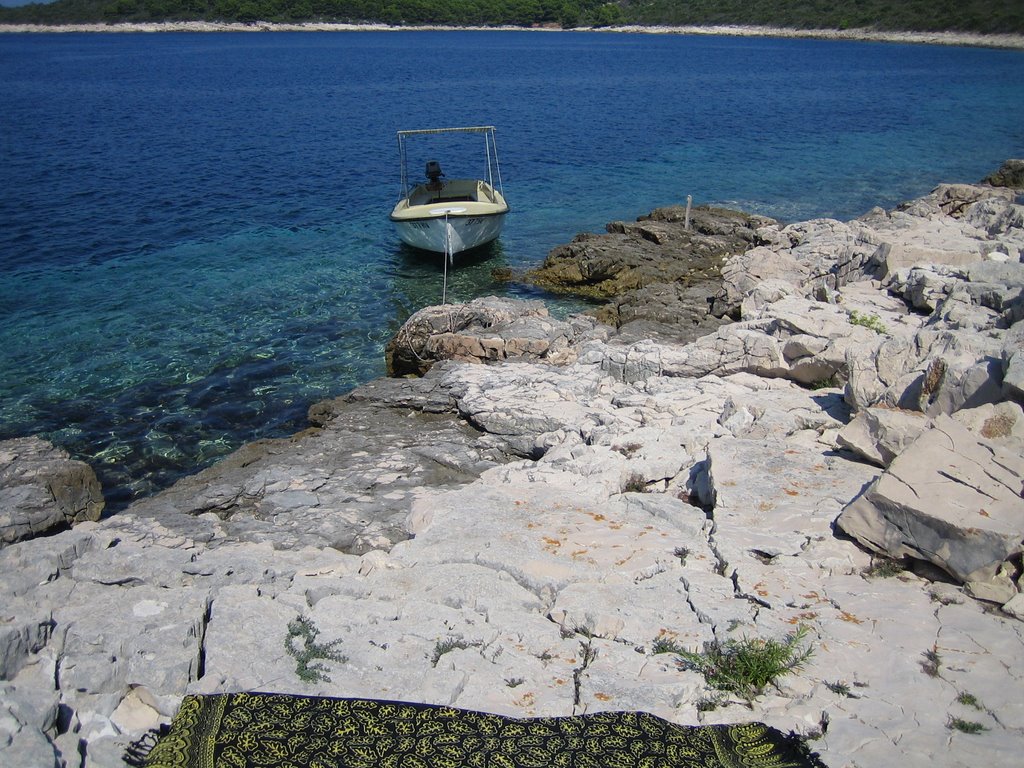 always says. He found a place that rented sea worthy kayaks on his run. We had hoped to explore some of the islands just offshore from the harbor. Much to our disappointment they were all rented for the day, so we opted for a small boat with an outboard instead, and did our exploring with 4 horsepower rather than 2 paddle power. The day was perfect, so we headed out over calm waters across the bay to the many islands in search of a deserted cove in which to set up a day camp. We were not disappointed. We found a calm spot on the back side of a bigger island and a rock to layout on surrounded by flowering lavender and rosemary bushes everywhere. It was here on U. Prevojice cove that we passed the afternoon snorkeling and napping under a gentle Mediterranean sun. On our way back we decided to get across the channel at the longest point in order to go up along the coast and check it out. The 4
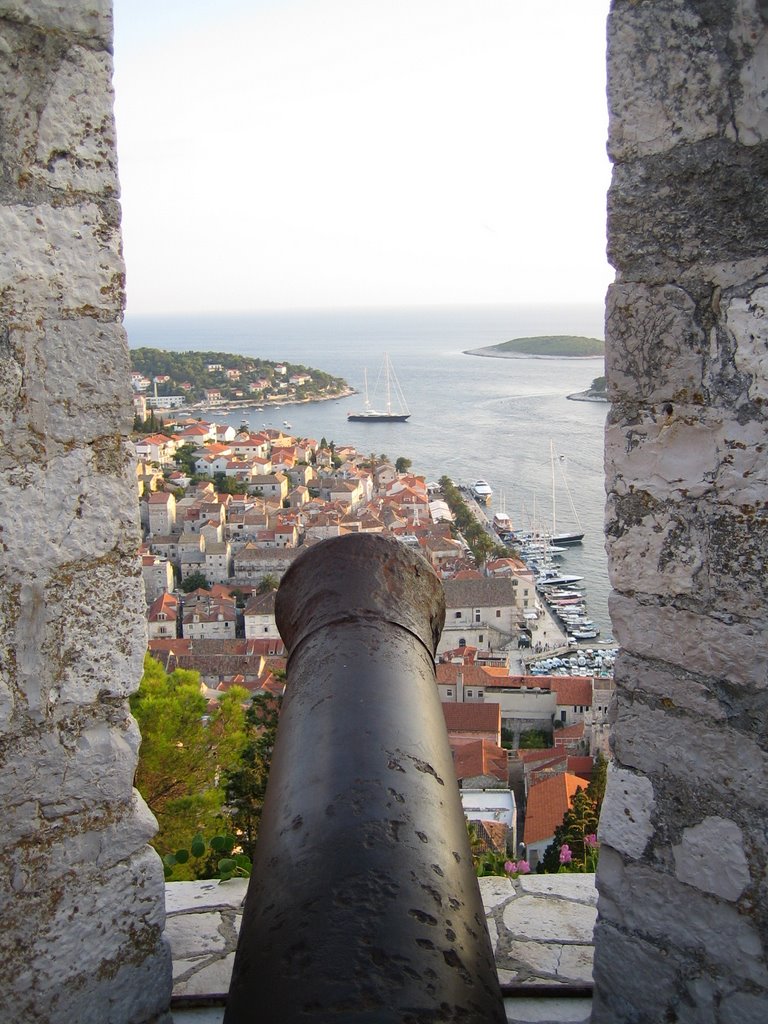 ft swells our little panga was surfing made the crossing a bit perilous and we were happy to be going with the waves and not into them. Once safely back in harbor we strolled up to the hillside Fort Spanjol for a pre-sunset view. The fort was built BC by the Illyrians and has been upgraded by the many different inhabitants. Th
 e walls dip into a portion of town and have a history of withstanding attacks. The most famous attack came from the Turks in the 15th century. They failed, but nature did what the Turks could not 20 years later when the fort was largely destroyed by a bolt of lightning that hit the gun powder room. If it's not one thing it's another. The dungeon area was a grim site as well. After our happy history lesson we walked back down to the town square for some ice cream. That night we had another good meal at 'The Captain's' restaurant on the waterfront and afterwards walked off the meal to the most famous and happening night spot on Hvar: Carpe Diem. Happy first day of fall!
Saturday the 23rd, was another gorgeous day. We had breakfast on the waterfront laughing at all the local dogs out for their morning stroll and hump. We bought some 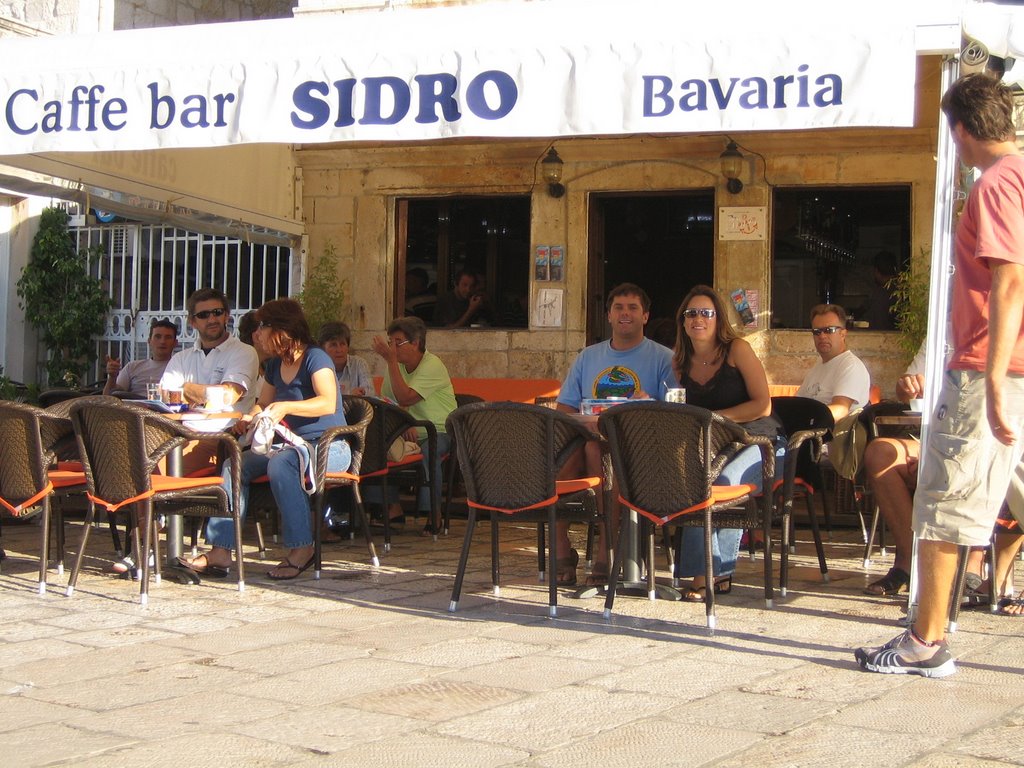 fruit and then left our guesthouse to tour the picturesque road to Stari Grad where we caught the ferry to Split. The road curved and peaked along fields with ancient stone barriers strewn throughout the hillside.
  Not too sure about their purpose, but erosion control was our guess. The fact is that with the wild lavender and rosemary hillside this was one of the most picturesque roads. Once at the ferry terminal (off of some gorgeous beaches with clear waters) we were happy to have arrived an hour before (the ticket agent had told us to be there 1.5 hrs before) because the line of cars was very long, even for the off-season. Too bad for the tardy who had to wait
 6 more hours for the next one. The ferry ride to Split took 1.5 hours. From the water Spilt looks like a large maritime port with tall buildings, but we knew there were historical parts that we needed to see like Diocletian's Palace and old town walls. At the end of our tour we concured with recommendations from others to split from Split. In
 the afternoon we started the 4 hour drive to our next destination, Rijeka, by heading inland through mountains reminiscent of the Eastern Sierra Nevada range. Later we rejoined the coast via a pass near the town of Senj. This is the coldest spot on the Adriatic Coast as the pass allows the cold, continental winds to swoop through unobstructed to the sea. Over time the winds have given the islands just offshore a ghostly, moonscape appearance by sweeping them clean of any signs of vegetation. That night we arrived in Rijeka to stay at the Gran Hotel Bonavia. After one look inside we could tell it was a destination in itself. Not that we were missing too much of Rijeka at night, but rather the nice bath and room service made it worthwhile to indulge at this nice hotel that we got via a half priced internet rate.
The next day, Sunday the 24th, Jrod went for a run around the town. The highlight was being deceived by a not-to-scale map into running up 543 steps to a gorgeous monastery high above  the city with spectacular 360-degree views. We had the best breakfast of the trip so far at the hotel; complete with champagne on offer, fresh fruit, real juices (not concentrates) eggs, bacon, and other great treats. We definitely overindulged here. We then set off to the next leg o
 f our journey to Italy. The Italian border is only 60km away, with Slovenia between for about half of those. Slovenia will be one of our next destinations, not just from the good impression we got with the short drive, but we had been told of how great outdoor adventures abound here. Near Ljubjana there is a great river for kayaking, and rafting and the winter skiing is also supposed to be good. Once we crossed into Italy near Trieste we were back to a more frenetic pace. We reflected on how nice things were in Croatia. Although similar to Italy in some ways, it seemed the lesser degree of tourism there made it nice. No one hassling you, laid back people, relatively cheap, good food and
 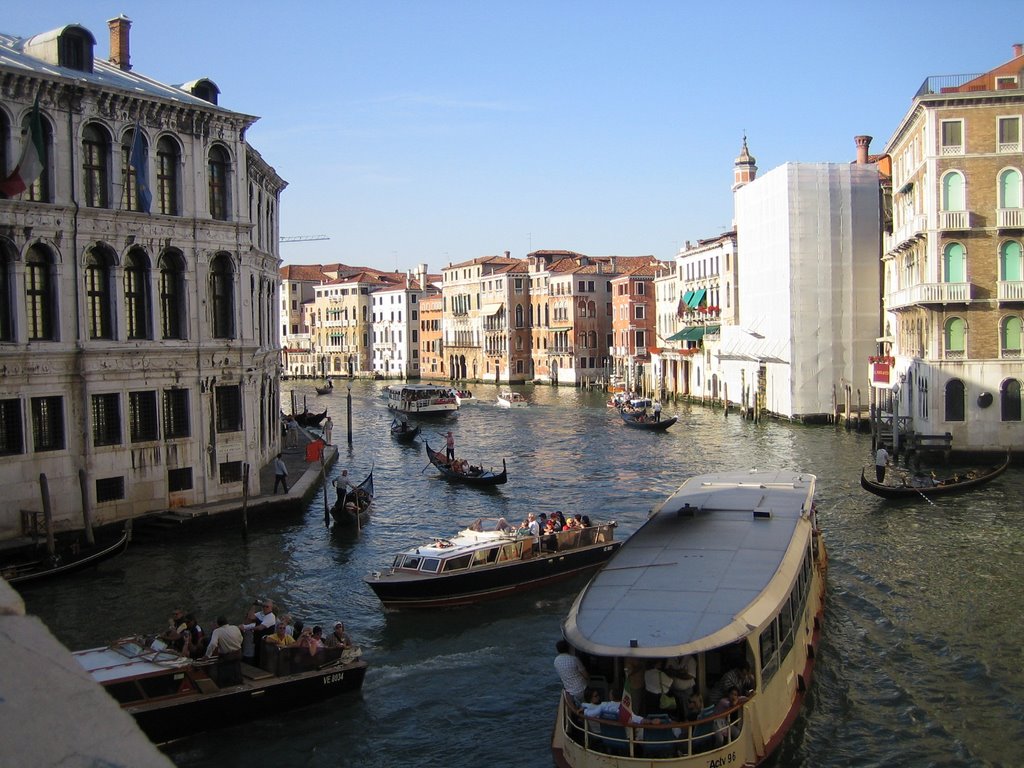 spectacular scenery. Maybe if you give it some time the throngs of tourist will even it out with Italy. With that said, Italy still holds its appeal. Venice is incomparable, just as are many of the other destinations in Italy that make it unique. It took us 3 hours altogether to arrive outside of Venice, in Mestre. Our next hotel, the Plaza, was just in front of the train station with
  departures every 10 minutes for the short (8min) ride into Venice. Once we got off the train we were wowed by the immediate image of canals right in front of you. There were tons of tourists, so we decided to get lost and make our way through the maze of this city. We weaved between alleys, over bridges, and plazas, amazed at the construction of this marvel. We then discovered the art of eating at Osterias where they
 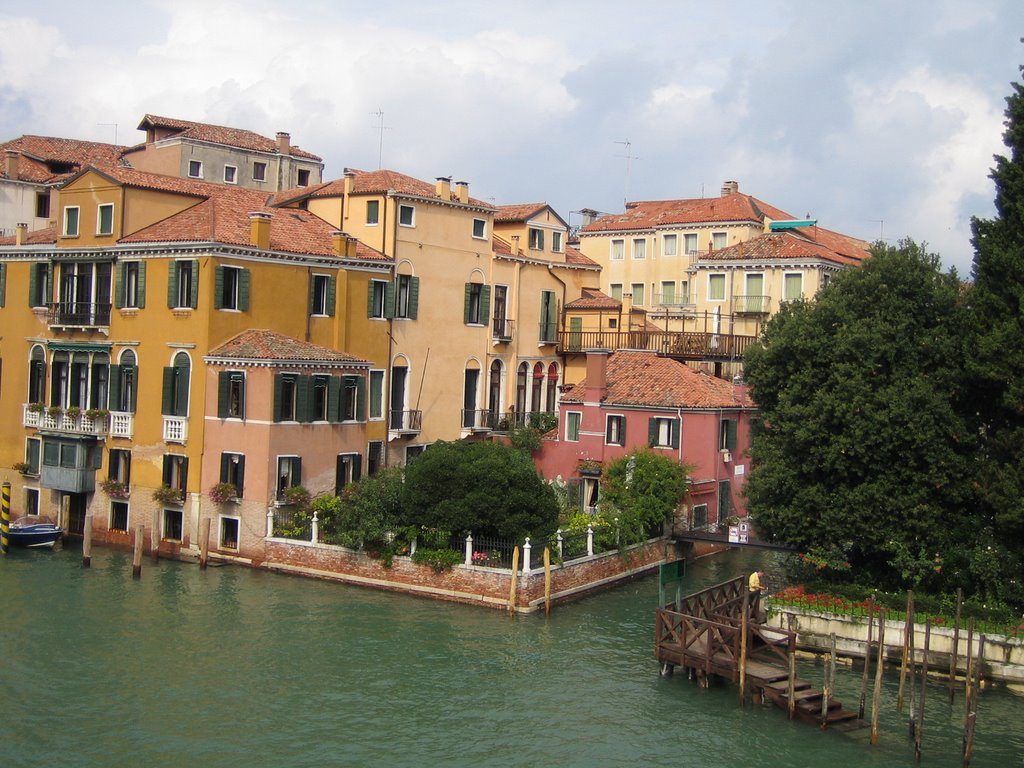 serve cichèti (small plates or canapés) sampling. These are small bars, similar to Spanish tapa places, where you order the different mini dishes at the counters along with half pours of wines. These places are where the locals meet for a snack, but were so good that we made it our mission to seek more out and make the tour a walking dinner the rest of the evening. Our favorite was Il Mondo del Vino, Via San Chianciano on the other side of the bridge from the post office. We then walked around the rest of the Cannaregio neighborhood making our way back to the station, stopping at yet another Osteria, Ai Promessi Sposi, before finishing with gelato as dessert.
On Monday the 25th things were calmer in the city, due to the workday and a light rain.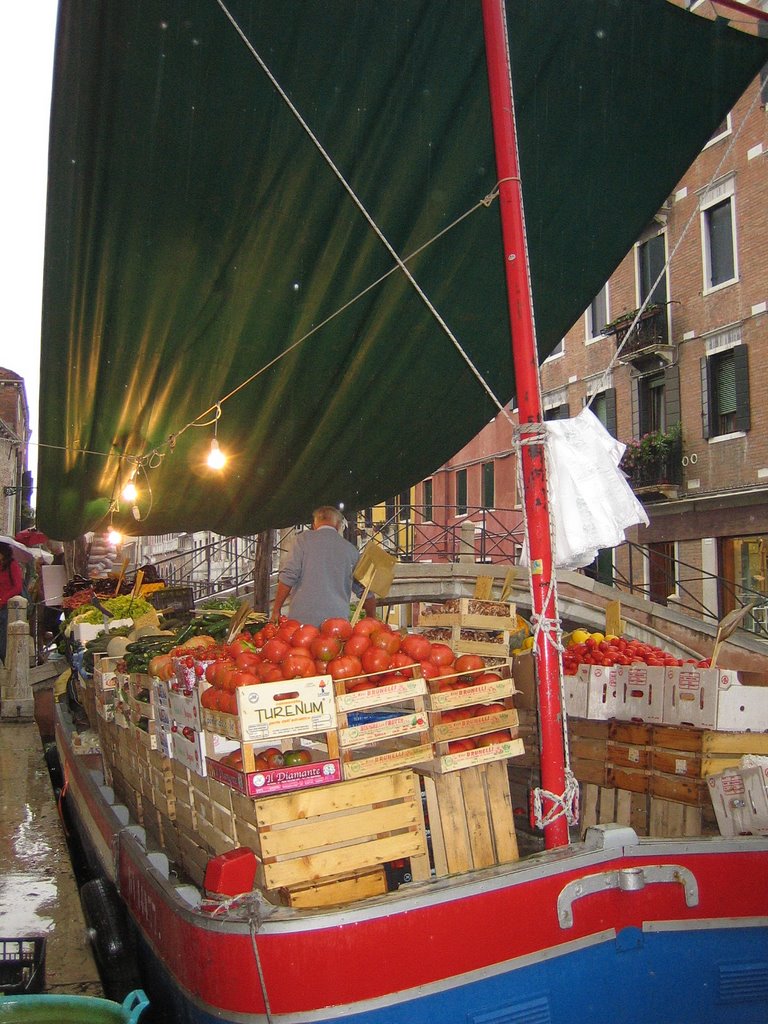 We decided to explore the Dorsoduro area below the train station. It amazed
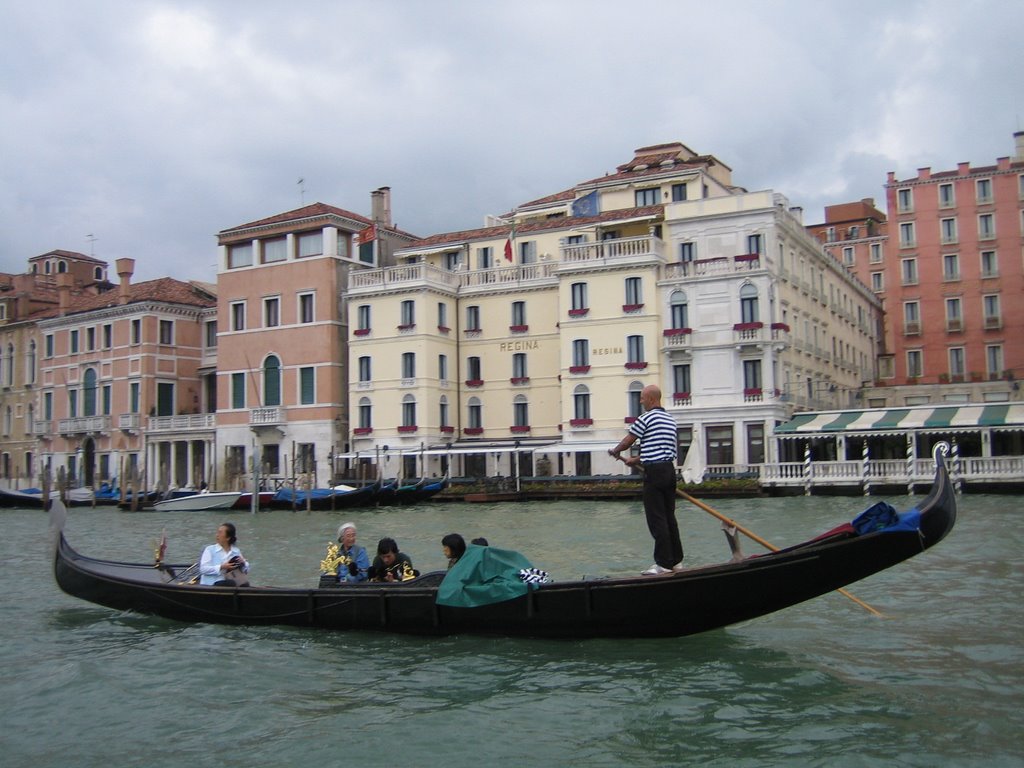
  us that most of the commerce involves boats, like the boats that sell produce. Along Campo Sta. Margherita we went to the workshop of sculptor Loris Marazzi, where 5 years before I had bought the wooden tuxedo bowtie Jrod has. His work is all carved out of pine with intricate details imitating movement. Jrod vowed to one day own one of his bigger pieces like the stools and bar. We continued along to another great cicchetteria called Osteria Enoteca Ai Artisti, where we ate some awesome artichoke, zucchini, and brussels sprout canapés. We found several more of these great establishments making it a total of 5 great stops on our walking and eating tour. We checked out the Piazza San Marco, which they should call Pigeon Plaza for the thousands of pigeons being fed by the tourists. Jrod, being no great fan of what he calls rats with wings, was ready to feed them Alka-Seltzer, so we took off towards the main canal. We caught the vaporetto back to the train station, which was one of the best ways to see Venice. All-in-all, we saw many great things and did Venice right.
 We picked up the car and headed south towards Florence. After two wrong turns the drive took about 4 hours. Many say it's murder to drive here, but those are the folks who just don’t pay
  attention at home. There are no Sunday drivers in Italy, unless they're in a ditch somewhere. We stayed at Hotel Caravaggio right in front of Pza. della Independenza with a room in the back with views to the city's roof tops and the famous Duomo. We were recommended a restaurant called Accademia on
 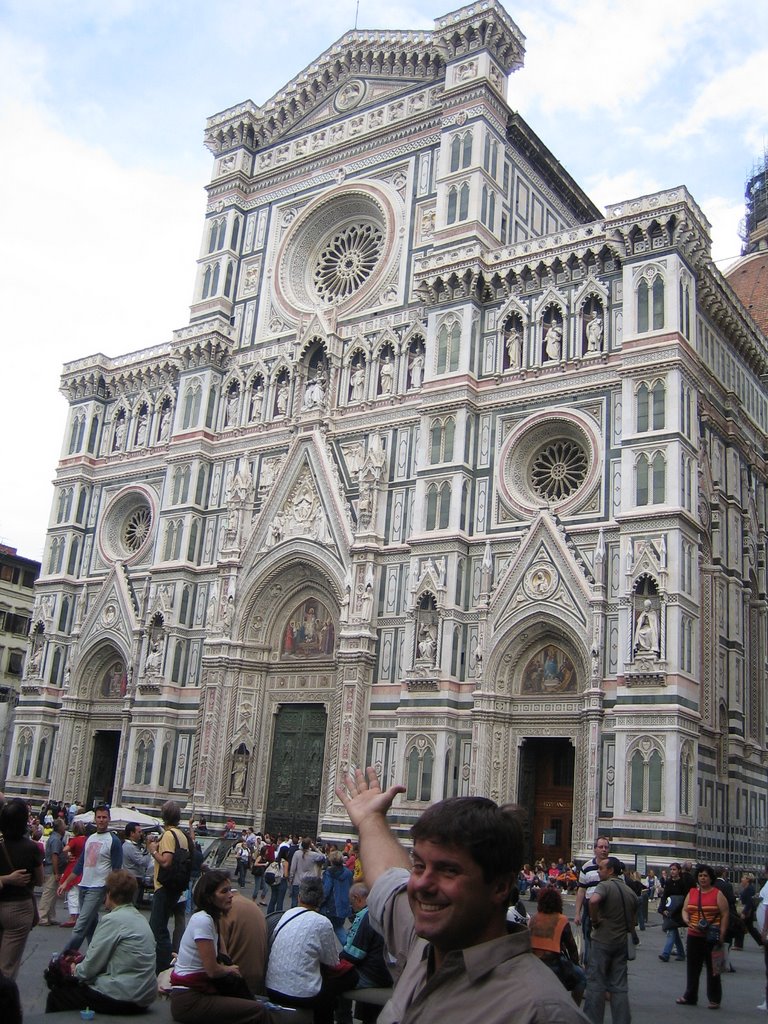 Pza. San Marco that was great. We had typical Tuscan bread, white bean and vegetable soup, wild boar pasta, and a tower of pork, pecorino and grilled vegetables. As usual washed down with the house table wine and a bottle of mineral water with gas. We walked off the meal to the Duomo, a 14th century church whose beauty and prescence is truly awe-inspiring. The doors depict 12 scenes from the bible, etched from bronze in 3 dimensions. Michaelangelo thought the doors so beautiful that he christened them the "Gates of Paradise" and proclaimed them to be a masterpiece; a term he never used lightly. We were grateful to be there without the crowds that gather during the day.
The next day, Tuesday 26th, Jrod went for a run to Ponte Alla Indiano about 3 miles down the Arno river. Heading out there is a bazaar about a mile long that sells absolutely everything from bras to saws. The boulevard the bazaar lays on is named after our very own George Washington. At one end is a bust of him carved from marble with an
 inscription attesting to his devotion to liberty. On the return he ran by all the sights some people take a day to see in about a half an hour once again proving that the best way to see a city is by running around it. For breakfast we went to the Mercato Centrale and had another awesome meal at one of the corner stands. They had a baked egg dish with vegetables, a meat stew and to finish it off a pulled pork sandwich. Yum! We bought fruit
  and called it a great meal. We walked around the market and checked out the many stalls selling clothes, leather goods, etc. Steph bought a red leather purse for a good price, and also had some baby bibs monogrammed as gifts for our pregnant friends. We went back for a break to the room then continued on to the Uffizi Gallery, which
 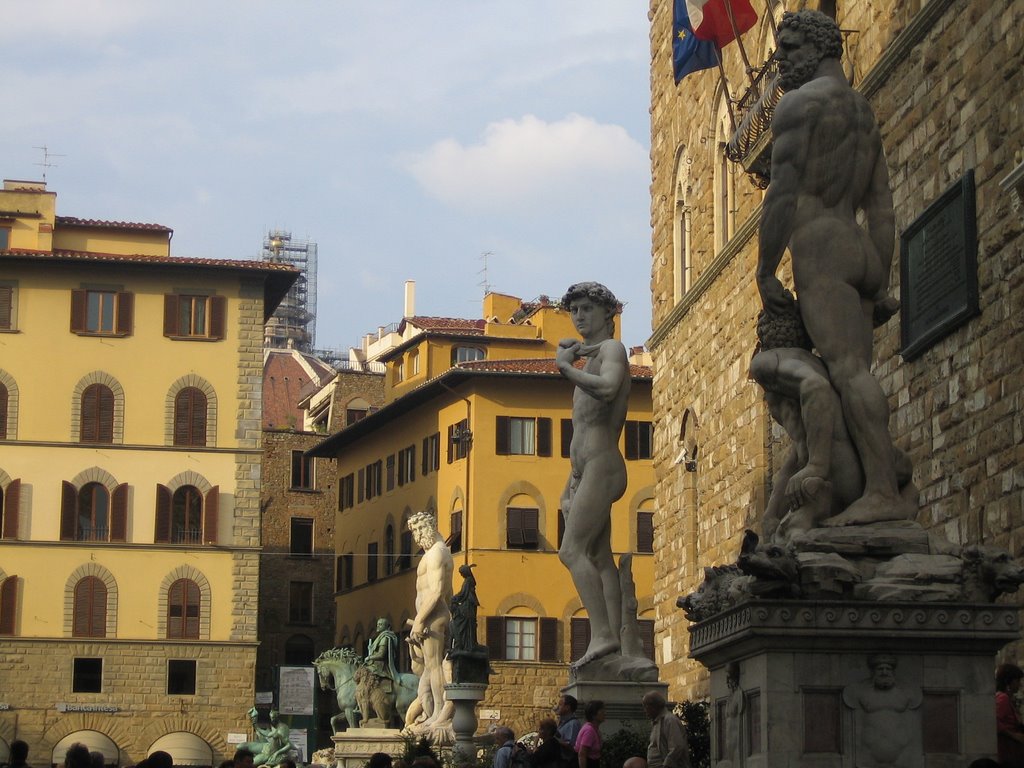 told us the next available reservations (to avoid the lines) was Friday! Jrod didn't feel like being part of the herds, so we crossed the Ponte Veccio, took pictures and continued on to Boboli Gardens and the Palazzo Pitti which we missed it closing at 5:30 by a few minutes. Everywhere we went in Italy we saw Smart cars to which Jrod became enamored, vowing to one day own one. By that time our feet were barking, so we caught the
 13 bus up to Pza. Michelangelo for a view of the whole city at sunset. We then walked down along south side of the Arno to eat at Steph's favorite Florentine restaurant- Osteria del Cinghiale Bianco (white boar restaurant). She had been here in 1992 on her first trip to Europe. At that time this was a splurge on her backpack budget, so she and her friend Coco thoroughly enjoyed it, especially the strozzapreti al burro (spinach and ricotta balls in a b
 utter sauce), the sole reason she wanted to return. The meal did not disappoint, with dishes such as Pappa al Pomodoro ( tomato, bread soup) Veal scaloppine with herbs, and Pasta alla chitarra (cherry tomatoes with percorino). The owner Marco was very nice and said he would reserve a table for 3 next time, but hopefully sooner than 14 years. We crossed the bridge and headed for gelato at Vivoli, reputed the best in the city. We walked so much today that the blocks to the hotel were like Chinese torture. We had our customary foot bath in the bidet of course- what else would it be for other than laundry and foot soaks? We were so tired from so much walking today that we passed out cold.
On Wednesday 27th, Steph bought some cute baby clothes before we said ciao to Florence. 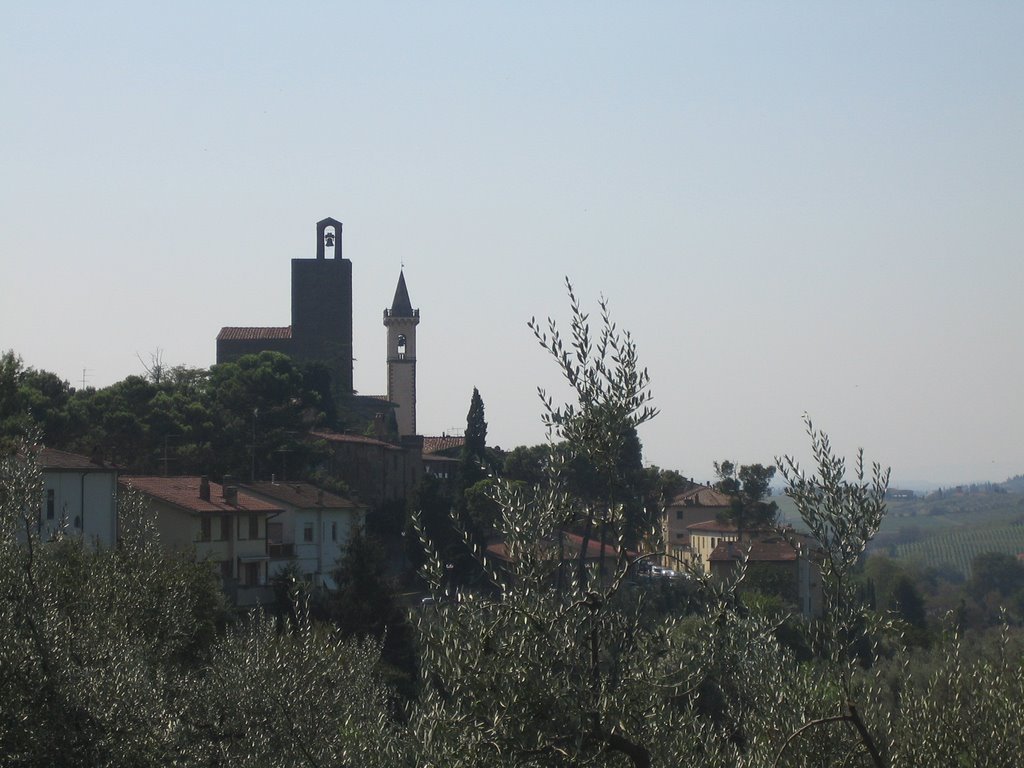 We took the scenic road through the town of Vinci, where Leonardo was born, and along the country roads of Tuscany. We toured San Gimignano's walled streets, but after 20 mins
  of tourist hoards, we moved on. On the roads we passed many loads of recently picked grapes because this was prime wine making season. We passed Colle di Val d'Elsa, stopped in Monteriggioni for some chianti in the plaza before heading to Monteroni d'Arbia to stay at Il Canto Del Sole, our farmhouse inn for the next couple of days. Our room overlooked the valley and the fields and had views of nearby
  hilltop villages; symbolic of the typical postcard views from Tuscany. The 20ft sloping ceiling have old wooden beams that inspire 18th century dreams. Since today was the critical day for the owners to bring in their grapes from the fields we were told dinner would be simple and served late. It turned out
 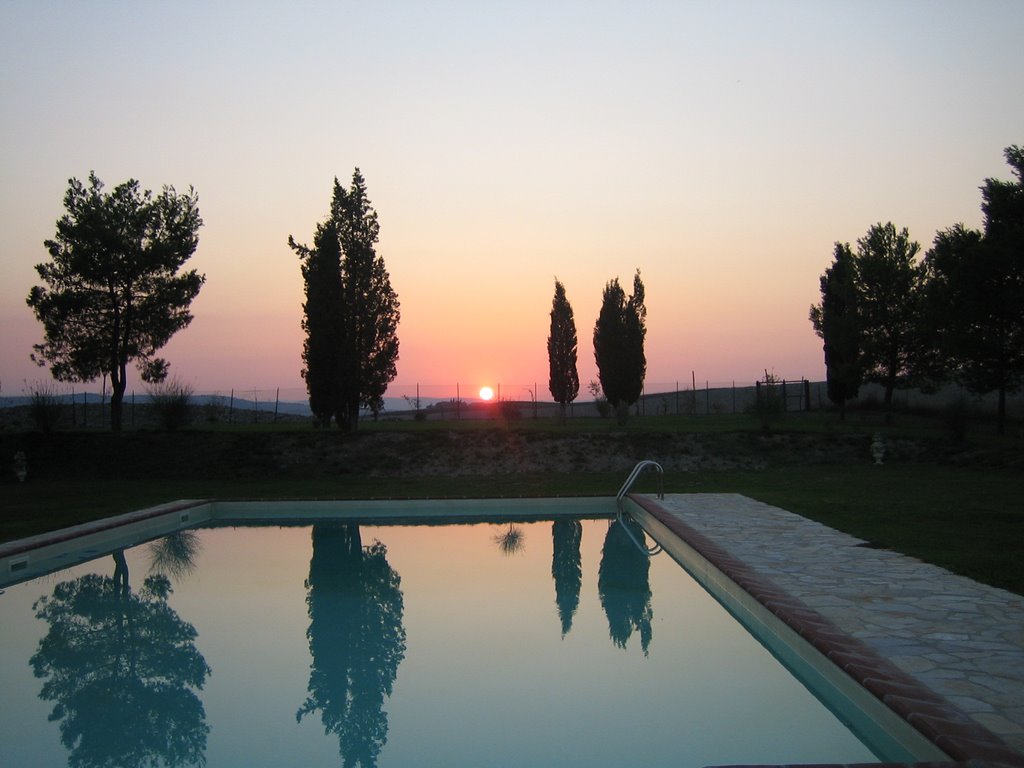 to be another delicious meal. Grilled sausages and pork ribs with more meat than I have ever seen, done simply with pepper and salt, watercress salad, bread cheese and cold cuts. They served their house wine as well. The grounds are beautiful, sitting on 3 hectares, with the refurbished farmhouse on the hill. Being so close to Siena and many of the marvels of Tuscany made planning the itinerary for the next day difficult, so we slept on it.
The sun was shinning brightly and the birds were signing to us on this Thursday morning,  September 28. We reflected on the prior day when San Gimignano was so chock full of tourists (like us) that Jrod sourly pronounced that all walled cities looked the same and that he was not interested in seeing any more. After that mini-meltdown we were back on the deserted roads and Jrod's tune changed
  back to how beautiful it was and how lucky we were to be there. This B&B was so charming, including the dog –Luna and the cat Nero--that we could not have stayed at a better Tuscan inn. During breakfast we charted our course for the day. Jrod decided to rent a mountain bike from
  the owners and go for one of those famous Tuscan rides. He grabbed a map and set out to find the least crowded roads. He did an excellent 35 km loop over rolling hills, through picturesque woods, vineyards and ancient towns not on any tourist map. About 30 percent of the ride was on dirt roads which made it off limits to even the road bikers. This tour cost a grand total of 5 euros: a price worth recalling the next time you read an advertisement for a Tuscan ride in a magazine. Stephanie spent the morning driving 1.5 hours to a leather shop that turned out to be closed. After our journey we met under the Tuscan sun for a poolside lunch of yummy fresh produce, meats and cheese she picked up along the road. Around happy hour went into Siena for a stroll. Siena is a neat place: though it is a walled city it does not have the feeling that many other towns have of closing once the tourists are gone for the day. It once rivaled Florence for regional power,
 but finally came under Medici rule after a series of unfortunate events--including the Black Death plague in 1348 that wiped out 2/3rds of the population-- and a final bloody siege. The main plaza of Siena is amazing. It's also the scene of the famous Palio horse race each summer where the neighborhoods of Siena battle for equine supremacy in a race that can be quite physical. We returned to our B&B in time for a delicious 4-course meal and homemade wine, and finished the evening next to the pool under a calm, starry Tuscan sky.
On Friday the 29th Jrod went for a morning run around the area on the numerous dirt roads that criss-cross the region. It was cut a little short when he encountered 4 very large dogs at a distant farmhouse barking and coming his way. With the dogs about a half kilometer away and closing fast, he turned around and made double-time. Further down the road he turned and was astonished to see 2 of the dogs were still in pursuit, so he cut across a field at full gallop. He didn't look back until he was safely into the vineyards of our B&B and jumped over the fence. Later that morning he recounted the story to Luciano, the owner of the B&B. In broken English he in turn recounted his numerous, not too pleasant experiences with those dogs and had a good chuckle over the story. That afternoon we set out for Rome at a leisurely pace, stopping at Bagno Vignoni for some natural hot springs in use since Roman times. We then went for a stroll and
 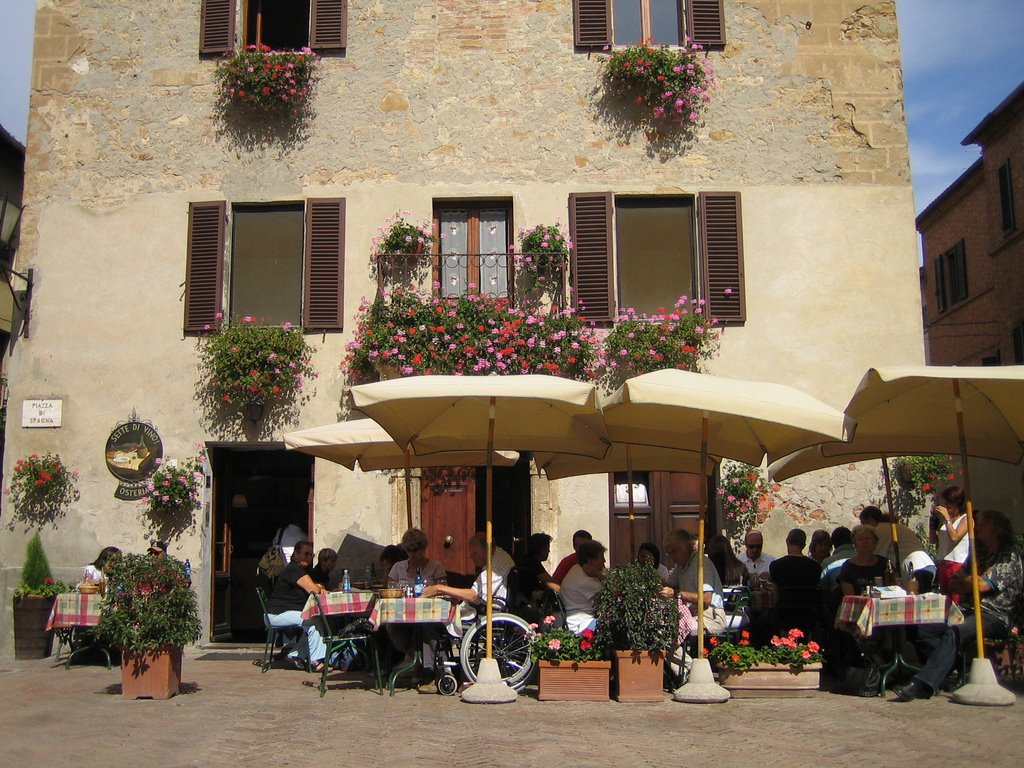 enjoyed a simple but magnificent lunch in the scenic hilltop town of Pienza which was a set in the movie The English Patient. After that Jrod wanted to see the one of the battlegrounds where Hannibal defeated the Roman Legion in 217 BC on the shores of Lake
  Trasimene, so we headed that way passing Montepulciano. Once we reached the lake we realized it was getting late, so we cut short our tour and headed for Rome which turned out to be a great call as it took us almost 2 hours, once inside Rome, to find our rental car drop off point. We made it with 15 minutes to spare. Driving in Rome is challenging to say the least, but fun, and it was a great way to see many of the magnificent sights as the sunset. Absent from the cacophony of the city is the excessive use of horns like one encounters in NYC for example. A flick of the lights is used instead. The horn is generally used as a warning rather than as a proxy for yelling at somebody, thougth I'm certain it's used as an offensive weapon from time to time. Our room at Hotel Miami (what a name) was nice and central; right on a main city artery that flowed into many sights. We pulled the pregnant card and asked for the quietest room possible. The owner was sitting in the lobby, saw the belly, and sent us to room 529; back of the building, top floor room with a balcony overlooking the rooftops of Rome.
Saturday the 30th we set out to do the tourist thing in Rome, doing a big walking loop which ended at the most famous of all Roman icons: the colosseum. It’s fascinating, especially considering that almost 1 million people were killed there one way or another during the 500 years it was used as the premiere location for all blood sport. The only time we felt ripped off during the whole trip came when a vendor charged 9€ ($11.70) for Gatorade and Fanta. But hey, they were the only ones selling cold drinks outside a tourist spot. That evening we took a 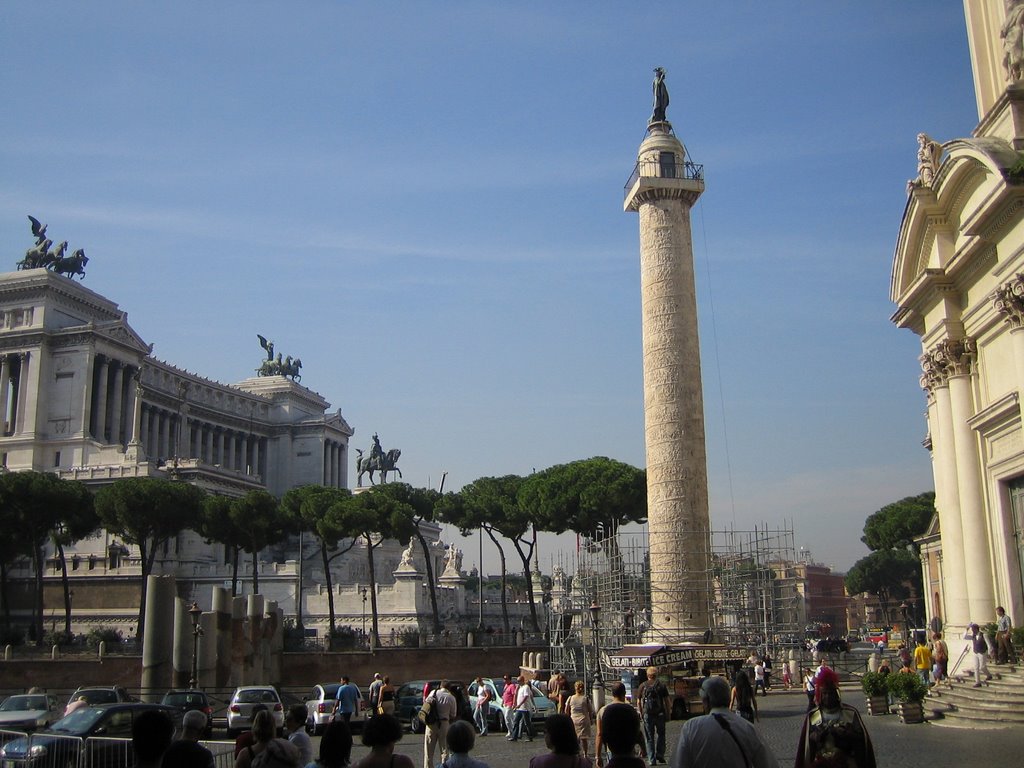 leisurely stroll across town past the Parthenon temple, through myriad piazzas, Navona and Campo de Fiori being the most famous ones. We then continued down narrow st
 reets to cross the river into Trastevere, a lively neighborhood with tons of night life for reservations at the Galeone Corsetti for a tasty meal of smoked fish, lamb alla romana, and veal satimboca. We saw so much, walked many miles and at the end of the day felt we covered very little of the city, but our swollen feet and wiped out bodies proved otherwise.
On October 1st, for our final day in Rome, we decided to go our separate ways in the morning and meet near the Spanish Steps for lunch later in the day. Steph went shopping all along the  Spanish steps area and I set out to visit Vatican City since she had already seen it before. It's quite a sight to behold. Now I know where all those Sunday morning offerings end up. Unfortunately the Vatican museum which features the famous Sistine Chapel was closed since it was Sunday, but the Pope was going to address the masses from his vacation retreat, so there were several large screen monitors set up in St Peters Square and no shortage of people gathered to hear him speak. I looked at my watch and noticed it was 15 minutes before the Pope was scheduled to go live and the excitement of the very large crowd was palpable: like when they dim the lights right before U2 goes on. This not being a concert of any kind, I rapidly moved towards the back of the crowd and out of St Peters Square just as the crowd surged and erupted in cheers and shouts of joy in 15 different languages. One cannot imagine the scene had he actually been there addressing the crowd live. Once safely away from the throngs, the walk resumed and I
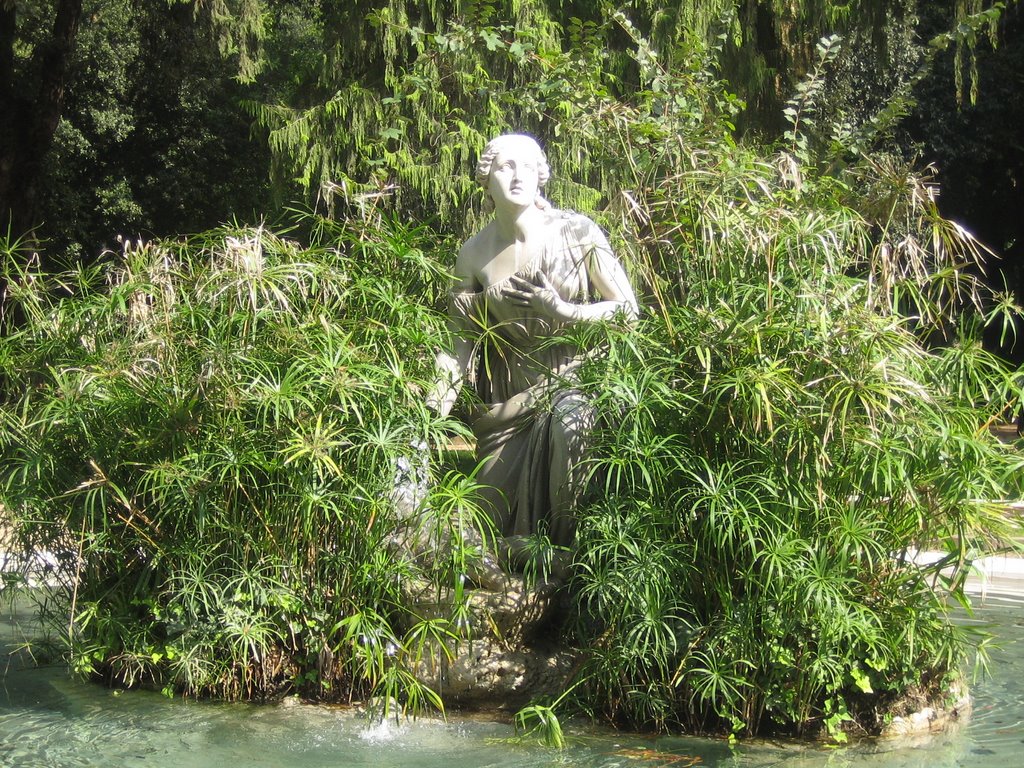 circumvented a large portion of the walled city before heading off to enjoy a beer in Villa Borghese, which overlooks the city. The beautiful lush green grounds provide a nice respite from the hectic city. I was a little early to meet Stephanie so I ducked into a nearby church replete with so many frescos, marble carvings and other works of art that had it not been Rome, surely this church would have been remarkable. Once we both met up again, we found that the restaurant we planned on eating at was closed, so we meandered back towards our hotel and found a decent cafe. We have
 had some good luck in finding good restaurants off the street. Follow your nose, it always knows. The Pasta Olimpico that Steph had was particularly delicious with mushrooms, peas and a tomato cream sauce. The vegetable and past soup was also not bad at all. Once back at the hotel, we took a moment to relax and let the puppies rest. Around 6pm, we headed out for our last night to enjoy the passagiata, the Italian custom where everyone—and I do mean everyone– goes out to the street for the evening stroll. That night we ate at what is largely recognized as Rome's best pizza. Da Baffeto is a family-run pizzeria that feeds all the senses. It can be found just around the corner from Piazza Navona. The line at the door was the first clue we were in for a treat. We were among many locals waiting for about 15 minutes to secure one of the many tables either in or outside. We got seated with a nice couple from the UK right next to where the pizza was made. The two guys tasked with making about 400 pizzas a night in a wood fired oven were nothing short of artists. One was dedicated to portioning and rolling out the dough, the other with saucing, topping and then cooking the pizza. The crust and toppings were so thin and the oven so hot that the pizza took only 2 min to cook-We timed it. Steph had one with zucchini flowers, mushrooms and ham, while I had the sausage, mushroom, and onion.
  When we left the
  queue outside was about 25 people long with plenty of locals in it too. That's always a sign of quality. After we again passed the Trevi fountain mobbed with people. This time Jrod threw some coins in the fountain and wished for a happy, healthy and smart baby girl. We then headed to the Panthenon area for some more delicious gelato. This time we tried the rice gelato that was out of this world. It was an excellent way to end a marvelous trip. We hope these memories will all be recounted in the years to come, not just with Samantha (who was there with us after all), but with all our loved ones. Now all that is left to be said is arrivederci!


